

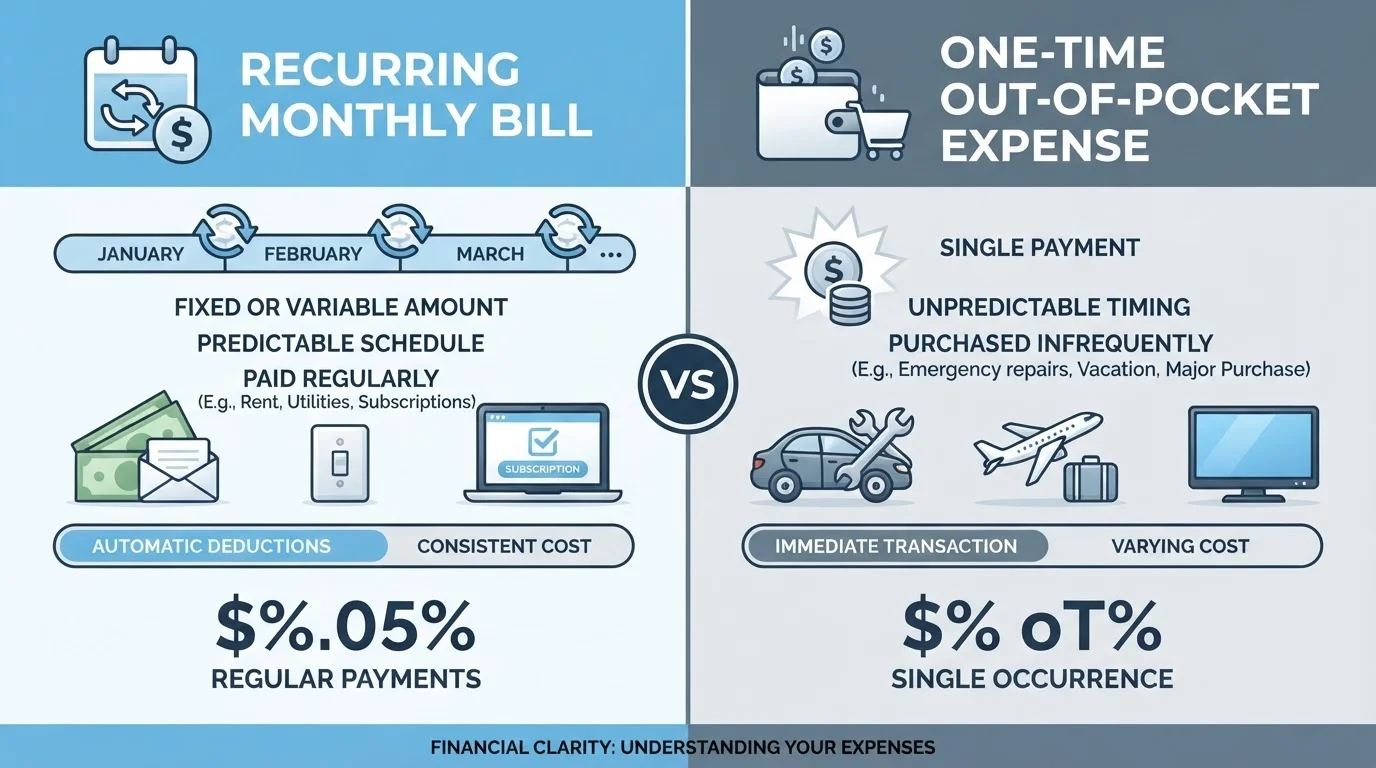
Key Takeaways
Option A
Premium
The ongoing cost of maintaining your coverage.
Best for: Understanding your regular, predictable insurance expense paid to keep a policy active.
Option B
Deductible
The out-of-pocket cost you absorb when a claim occurs.
Best for: Understanding what you'll owe before your insurer pays out after a covered loss.
If you want to understand your monthly or annual insurance bill
Premium
The premium is the scheduled payment you make to your insurer to maintain active coverage, regardless of whether you file a claim.
If you want to know what you'll owe after an accident or covered event
Deductible
The deductible is the fixed dollar amount you must pay first before your insurer steps in to cover the remaining eligible loss.
If you are deciding how to structure a new or renewed policy
Premium
Start with a premium that fits your budget, then adjust your deductible level to find the tradeoff that works for your financial situation.
What Is a Premium?
An auto insurance premium is the amount you pay your insurer - typically monthly, semi-annually, or annually - to keep your policy active. Think of it as a membership fee: you pay it continuously, whether or not you ever file a claim. If you stop paying, your coverage lapses.
Premiums are calculated based on a range of factors, including your driving record, vehicle type, location, age, coverage selections, and claims history. Insurers use statistical models to estimate the likelihood that you will file a claim and price your premium accordingly. No two drivers will have the same premium, even for identical coverage, because the underlying risk profiles differ.
Your premium does not change based on whether you file a claim in a given period - though a claim on record can affect what your insurer charges at renewal. For a broader look at how policy pricing connects to coverage choices, see the Coverage Types overview.
What Is a Deductible?
A deductible is the dollar amount you agree to pay out of pocket when you file a claim before your insurance covers the remaining eligible costs. For example, if a covered repair costs $3,000 and your deductible is $500, you pay $500 and your insurer pays $2,500.
Deductibles apply per claim - not per year - for most auto insurance coverage types. Common deductible amounts range from $250 to $2,000, and you typically select yours when purchasing or renewing a policy. A higher deductible means you absorb more financial risk per incident; a lower deductible shifts more of that risk to the insurer.
It is important to note that deductibles do not apply to all coverage types equally. Liability coverage - which pays for damage or injury you cause to others - generally carries no deductible. Collision and comprehensive coverages typically do. For a detailed breakdown, see how deductibles work across different coverage types.
| Criterion | Premium | Deductible |
|---|---|---|
| When you pay it | Regularly (monthly, semi-annually, annually) | Only when you file a covered claim |
| Purpose | Keeps your policy active | Your share of a covered loss |
| Amount | Set by insurer based on risk factors | Chosen by policyholder at purchase |
| Applies to all coverage types? | Yes | No - not applicable to liability |
| Relationship to each other | Higher deductible = lower premium | Lower deductible = higher premium |
| Predictability | Fixed and scheduled | Variable - triggered by events |
How Premiums and Deductibles Interact
The relationship between premiums and deductibles is one of the most practical concepts in auto insurance. As a general rule, they move in opposite directions: choosing a higher deductible lowers your premium, and choosing a lower deductible raises it. This is because a higher deductible means you're taking on more financial responsibility per claim, reducing the insurer's expected payout - and therefore the cost of insuring you.
$500-$1,000
Most common deductible range chosen by U.S. drivers
Industry surveys consistently show this range as the most frequently selected, reflecting a balance between premium savings and manageable out-of-pocket exposure.
~15-30%
Typical premium reduction from doubling your deductible
According to general insurance pricing principles, moving from a $250 to a $500 deductible or from $500 to $1,000 can reduce collision and comprehensive premiums meaningfully, though exact savings vary by insurer and profile.
This tradeoff has real implications. A lower monthly premium may seem attractive, but if you set your deductible higher than you could comfortably pay after an unexpected accident, you may find yourself financially strained at the worst moment. Conversely, paying a higher premium for a low deductible may cost more over time if you rarely file claims.
When evaluating this balance, consider your emergency savings, how often you drive, and your local risk environment. Our guide on choosing a deductible you can actually afford walks through this decision in detail.
Common Misconceptions Cleared Up
Several persistent misunderstandings arise around these two terms. Here are the most common ones worth addressing directly:
- "My deductible is what I pay every month." - No. Your monthly payment is your premium. The deductible is only triggered when you file a claim.
- "Filing a small claim saves me money because I already paid my premium." - Filing a claim can affect your premium at renewal, so it is worth comparing the claim amount to your deductible and potential rate changes before filing. See how fault vs. no-fault claims affect your premium for more context.
- "A higher deductible is always better." - Only if you have the savings to cover it. A deductible you cannot realistically pay offers false economy.
Deductible Waivers: An Exception Worth Knowing
Some insurers offer a deductible waiver in specific circumstances - for example, if the other driver is clearly at fault and their insurer accepts liability, you may not owe your deductible at all. Certain policies also include a disappearing or vanishing deductible feature that reduces the deductible amount for each claim-free year. Check your policy documents or ask your agent whether either provision applies to your coverage.
For a complete reference of terms you'll encounter in a policy document, the auto insurance coverage glossary is a useful companion resource.
This article is for general informational purposes only and does not constitute personalized insurance, financial, or legal advice. Coverage terms, deductible options, and premium factors vary by insurer, policy, and state. Always review your actual policy documents and consult a licensed insurance agent or adviser for guidance specific to your situation.