

Key Takeaways
Why a Quote Contains More Than a Price
When an insurer generates a quote, they are not simply naming a figure - they are producing a structured summary of every coverage element they are prepared to offer, along with the exact terms and conditions attached to each. Reading past the total premium to understand those individual components is what separates an informed policyholder from someone who is surprised at claim time.
If you are new to insurance terminology, our auto insurance terms reference explains the vocabulary you will encounter throughout this process. For a broader look at how a full policy is organized, see Auto Insurance Policies, Decoded.
What you will need
How to Read Your Quote Step by Step
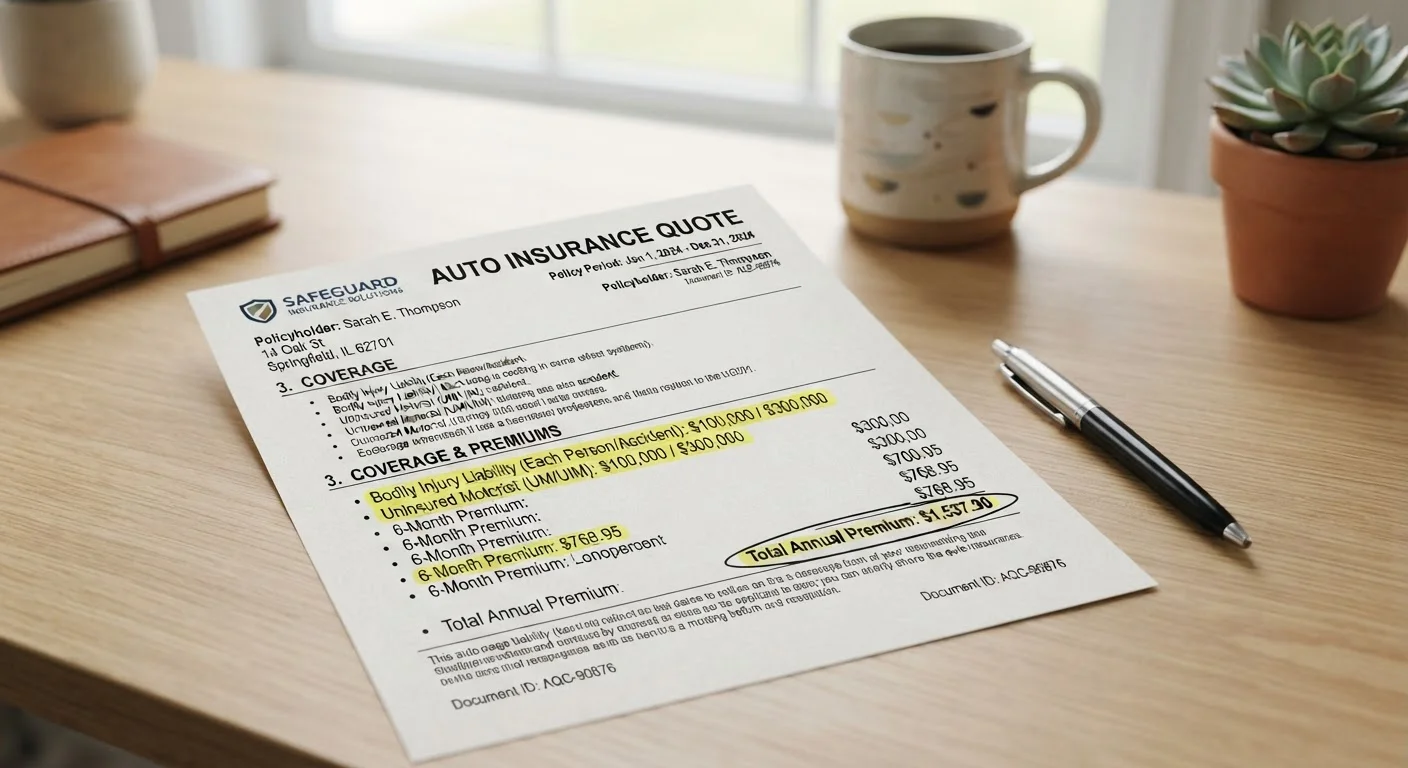
Work through each section of the quote document in the order it appears. Insurers generally follow a consistent structure - named insured and policy period, vehicle details, coverages with limits and deductibles, rating factors, discounts and surcharges, and finally the total premium. The steps below mirror that structure.
Auto Insurance Quote Document
The primary document you will read and interpret line by line throughout this process.
Coverage Terms Reference
A glossary of insurance terminology to clarify unfamiliar words encountered in the quote.
Comparison Worksheet or Spreadsheet
Used to record coverage limits and premiums side by side when comparing multiple quotes.
Locate the Named Insured and Policy Period
At the top of any quote, you will find the named insured - the person (or people) the policy is issued to - along with the policy period, which states the exact start and end dates of coverage. Verify that your name is spelled correctly and that the listed address matches your garaging location, since insurers use your address to assess regional risk factors and rate accordingly.
Identify the Vehicle Being Quoted
The quote will list the year, make, model, and VIN of the vehicle. Confirm these details are accurate. An incorrect model trim level, for example, can result in a premium that does not reflect the true replacement cost or safety profile of your actual vehicle.
Read Each Coverage Line and Its Limit
This is the core of the quote. Each coverage type - such as bodily injury liability, property damage liability, collision, and comprehensive - is listed as a separate line with its own coverage limit. Limits are often expressed as split numbers (e.g., 100/300/100), where the first figure is the per-person bodily injury maximum, the second is the per-accident maximum, and the third is the property damage maximum, all in thousands of dollars.
For a plain-language explanation of what each coverage type actually protects, see our coverage types guide.
Note the Deductible for Each Coverage
Alongside each applicable coverage (most commonly collision and comprehensive), you will see a deductible - the amount you pay out of pocket before the insurer pays the remainder of a covered claim. A $500 deductible means you absorb the first $500 of a repair bill; the insurer covers the rest up to your policy limit. Quotes often present multiple deductible options, which directly shift the premium up or down.
Review Discounts and Surcharges
Most quotes include a section that adjusts the base rate. Discounts (e.g., multi-policy, good driver, anti-theft device) reduce the premium; surcharges (e.g., recent at-fault accident, traffic violations) increase it. Reading these line items tells you exactly why your quoted price is what it is - and whether any discount you expected is actually being applied.
Compare the Total Premium and Payment Structure
The final premium is the total cost for the full policy period, typically six or twelve months. The quote will also show whether installment payment options are available and whether a service fee applies when paying in installments rather than in full. Factor these fees into your true cost calculation before deciding how to pay.
Compare Equivalent Coverage, Not Just Price
When placing two quotes side by side, confirm that the same coverage types, limits, and deductibles appear on both. A lower total premium may simply reflect lower limits or higher deductibles, not a better deal. Use our coverage glossary to decode any unfamiliar terms before making a judgment.
A Quote Is Not a Binding Policy
A quote is an estimate based on the information provided at the time of application. Your actual premium can change after the insurer verifies your driving record, credit history (where permitted by law), and vehicle details. Always read the final issued policy documents before assuming coverage is in place.
General Information Only - Not Personalized Advice
This article explains how to read a standard auto insurance quote in general terms. Coverage options, pricing factors, exclusions, and regulations vary significantly by insurer and by state. For guidance specific to your situation, consult a licensed insurance agent or broker and read your actual policy documents carefully.
After You've Read the Quote
Once you understand each element of a quote, you are positioned to make a meaningful comparison. Standardize the comparison by ensuring coverage limits and deductibles are identical across every quote you review. If a specific line item is unclear - such as an endorsement (a policy add-on that modifies standard coverage) or an exclusion - ask the insurer or agent to explain it in writing before you proceed.
Keep in mind that interpreting a quote is a different skill from interpreting a final policy. The coverage types hub provides ongoing reference as your understanding deepens. And if you want a related exercise in parsing itemized documents, our guide to decoding a repair estimate applies similar critical-reading habits to auto repair invoices.
This article provides general educational information about how auto insurance quotes are structured. It is not personalized insurance, financial, or legal advice. Coverage terms, pricing factors, and applicable regulations vary by provider and by state. Always review your actual policy documents and consult a licensed insurance agent or adviser for guidance specific to your circumstances.