

Key Takeaways
Potential for meaningful premium reductions
Drivers who score well during the monitoring period can receive discounts - the exact range varies by insurer and programme structure, but safe, low-mileage drivers are generally positioned to benefit most.
Fairer pricing for low-mileage drivers
Traditional rating factors like age and ZIP code can penalise drivers who rarely use their vehicle. Telematics lets actual usage carry more weight, which can be an advantage for remote workers or retirees.
Real-time feedback on driving habits
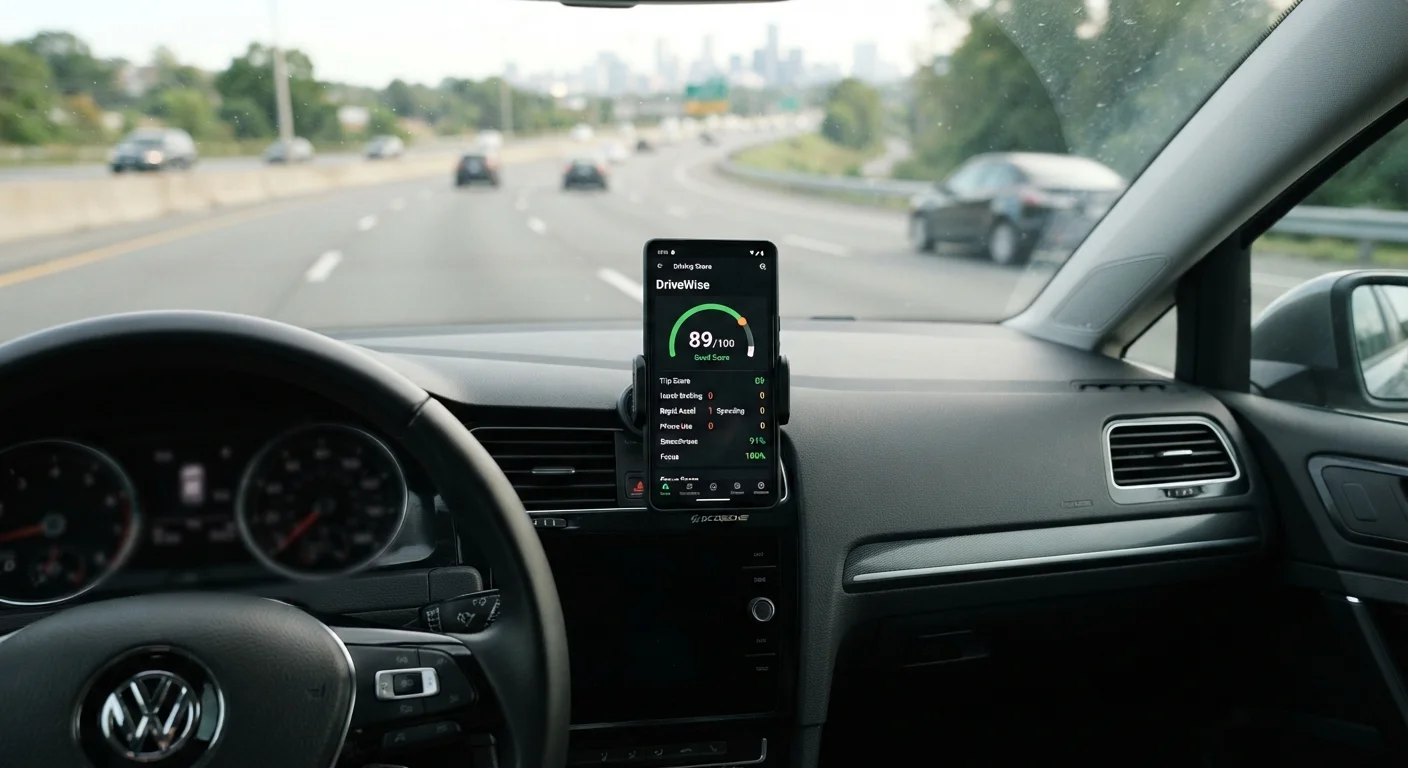
Many UBI apps provide a driving score after each trip, making it easier to identify specific behaviours - such as hard braking or phone use - that could be improved for both safety and scoring purposes.
Enrolment discounts available upfront
Some insurers apply a small discount simply for signing up and completing the monitoring period, before any behavioural score is calculated - providing an immediate, low-risk incentive.
Rates can increase for poor driving scores
Not all UBI programmes are discount-only. In programmes that allow adverse adjustments, a poor score during the monitoring period can result in a higher renewal premium than you would have received without participating.
Extensive behavioural data is collected
Beyond mileage, telematics programmes can log exact trip routes, times, speeds, and phone-handling events. This creates a detailed record of daily movement that persists in the insurer's data systems.
Shared vehicles complicate your score
If a partner, teen, or occasional borrower drives a monitored vehicle, their driving behaviour is attributed to your policy. A single poor driver in the household can undermine an otherwise strong score.
Privacy and third-party data sharing risks
Data retention periods and sharing policies vary widely. Some carriers reserve the right to share data in legal proceedings or with affiliated entities - a risk that is difficult to assess without reading the full programme terms.
Monitoring can feel intrusive or stressful
Knowing every trip is scored can create anxiety, particularly for drivers in areas with congested traffic, unavoidable night driving, or road conditions that require abrupt braking regardless of skill level.
Our Verdict
Usage-based insurance can be a genuinely useful tool for drivers whose habits align with what insurers reward - low mileage, smooth braking, and daytime driving. However, the data-sharing commitment is significant, and not every driver will come out ahead financially. Weigh the potential savings against the privacy trade-offs and the risk of an adverse rate adjustment before signing up.
UBI programmes are best suited to low-mileage drivers with consistent, cautious habits who are comfortable sharing behavioural driving data with their insurer.
What Usage-Based Insurance Actually Tracks
Usage-based insurance (UBI) - sometimes called telematics insurance - replaces traditional rating factors like age and credit score with data drawn directly from your driving. Insurers collect this data through a small plug-in device (connected to your car's OBD-II port) or, increasingly, through a smartphone app.
The monitored metrics typically include:
- Miles driven - the foundation of most pay-per-mile variants
- Hard braking and rapid acceleration - indicators of aggressive driving
- Speed - including time spent above posted limits
- Time of day - late-night driving correlates statistically with higher claim rates
- Phone handling - some apps flag distracted-driving behaviour
The monitoring period is usually 30-90 days, after which your insurer calculates a score and applies a discount - or in some programmes, a surcharge. To understand how telematics fits into the broader premium picture, see why insurers price your policy the way they do.
Pay-Per-Mile vs. Behaviour-Based Programmes
UBI programmes come in two main variants. Pay-per-mile insurance charges a base rate plus a fixed cost per mile driven - straightforward for low-mileage drivers. Behaviour-based programmes score your driving style regardless of mileage and apply a discount or surcharge accordingly. Some programmes combine both elements. Knowing which type your insurer offers is essential before you enrol, since the mechanisms - and the risks - differ meaningfully.
The Advantages of Enrolling
For the right driver, telematics programmes offer benefits that go beyond a discount coupon.
Potential for meaningful premium reductions
Drivers who score well during the monitoring period can receive discounts - the exact range varies by insurer and programme structure, but safe, low-mileage drivers are generally positioned to benefit most.
Fairer pricing for low-mileage drivers
Traditional rating factors like age and ZIP code can penalise drivers who rarely use their vehicle. Telematics lets actual usage carry more weight, which can be an advantage for remote workers or retirees.
Real-time feedback on driving habits
Many UBI apps provide a driving score after each trip, making it easier to identify specific behaviours - such as hard braking or phone use - that could be improved for both safety and scoring purposes.
Enrolment discounts available upfront
Some insurers apply a small discount simply for signing up and completing the monitoring period, before any behavioural score is calculated - providing an immediate, low-risk incentive.
~20%
Typical maximum discount range cited by carriers
Industry programme materials frequently cite potential discounts up to around 20%, though actual savings depend on driving score, programme rules, and the insurer - results vary.
30-90 days
Common initial monitoring period length
Most telematics programmes establish your baseline score over a monitoring window of one to three months before applying a rate adjustment at renewal.
Beyond the discount itself, many programmes provide a personalised driving dashboard - a useful feedback loop that can make drivers more aware of habits like hard braking or late-night trips. Some policyholders find that visibility alone nudges them toward safer behaviour. For a broader map of discount categories available on a standard policy, see the field guide to common discount eligibility criteria.
The Disadvantages and Risks
The trade-offs are real, and they deserve careful consideration before you enrol.
Rates can increase for poor driving scores
Not all UBI programmes are discount-only. In programmes that allow adverse adjustments, a poor score during the monitoring period can result in a higher renewal premium than you would have received without participating.
Extensive behavioural data is collected
Beyond mileage, telematics programmes can log exact trip routes, times, speeds, and phone-handling events. This creates a detailed record of daily movement that persists in the insurer's data systems.
Shared vehicles complicate your score
If a partner, teen, or occasional borrower drives a monitored vehicle, their driving behaviour is attributed to your policy. A single poor driver in the household can undermine an otherwise strong score.
Privacy and third-party data sharing risks
Data retention periods and sharing policies vary widely. Some carriers reserve the right to share data in legal proceedings or with affiliated entities - a risk that is difficult to assess without reading the full programme terms.
Monitoring can feel intrusive or stressful
Knowing every trip is scored can create anxiety, particularly for drivers in areas with congested traffic, unavoidable night driving, or road conditions that require abrupt braking regardless of skill level.
It's also worth noting that data retention policies and third-party sharing practices vary widely by insurer. Some carriers state they may share anonymised data with researchers or, in limited circumstances, with legal or regulatory bodies. Read the programme's privacy disclosure - not just the marketing summary - before you opt in. For plain-language definitions of terms like telematics discount and programme exclusion, see the core claims and discounts glossary.
How to Decide Whether UBI Is Right for You
A telematics programme is neither universally beneficial nor universally harmful - the outcome depends heavily on your specific driving profile and comfort with data sharing.
Ask yourself these questions before enrolling:
- Do I drive fewer miles than average? Pay-per-mile structures reward low-mileage drivers most directly.
- Are my driving hours mostly daytime? Night driving typically scores lower in UBI models.
- Can my rate go up? Some programmes are discount-only; others can surcharge. Confirm this in writing.
- What exactly is collected, and for how long? Review the data retention and sharing policy before enrolment.
- Does my household share the vehicle? Another driver's habits on your monitored car affect your score.
UBI is one of several strategies available for managing your premium. Adjusting your deductible is another - explore the trade-offs in choosing a deductible you can actually afford. There may also be discounts you haven't yet claimed - discounts drivers often overlook covers categories worth asking your insurer about.
This article is for general informational purposes only and does not constitute personalised insurance, financial, or legal advice. Coverage options, programme availability, data practices, and eligibility rules vary by insurer and by state. Read your policy documents carefully and consult a licensed insurance agent or adviser for guidance specific to your situation.