

Key Takeaways
Option A
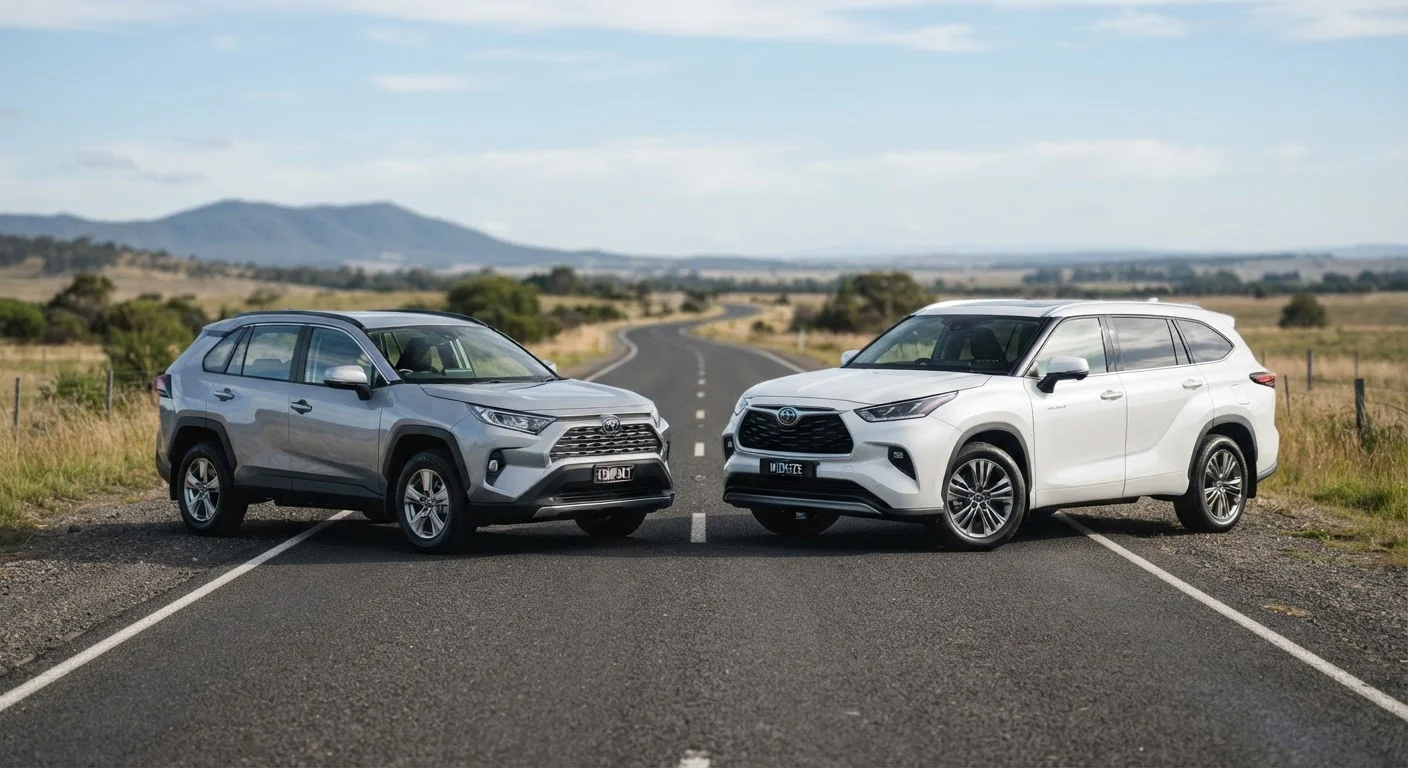
Compact SUV
The nimble, fuel-efficient everyday option.
Best for: Commuters, urban drivers, and small families who prioritize fuel economy, parking ease, and a lower cost of ownership.
Option B
Midsize SUV
The roomier, more capable family hauler.
Best for: Families needing expanded cargo space, more passenger comfort, and greater towing or payload capacity.
If you drive mostly in cities or dense suburbs
Compact SUV
Shorter wheelbases and narrower bodies make compact SUVs far easier to park and maneuver in tight urban environments, without sacrificing comfort for two or three passengers.
If you regularly carry five or more passengers with luggage
Midsize SUV
Midsize cabins offer meaningfully more rear legroom and cargo volume, making long trips less cramped and gear hauling more practical.
If fuel costs are a primary concern
Compact SUV
Compact SUVs use smaller, more efficient engines and carry less mass, translating to lower pump costs over tens of thousands of miles.
If you tow a trailer, boat, or camper
Midsize SUV
Most midsize SUVs are rated to tow between 3,500 and 5,000 lbs, while compact SUVs typically cap out well below that threshold.
If you want to minimize total ownership cost
Compact SUV
Lower MSRP, better fuel economy, and often lower insurance premiums combine to make compact SUVs more affordable to own over a multi-year period.
Defining Each Segment: Size, Weight, and Platform Differences
The compact and midsize SUV segments are defined primarily by overall vehicle dimensions and platform architecture. Compact SUVs typically measure between 174 and 186 inches in overall length, with wheelbases around 103-108 inches. Midsize SUVs generally run from 188 to 200 inches in length, supported by wheelbases in the 112-116 inch range. That roughly one-foot difference in body length cascades into measurable gaps in cabin volume, cargo space, and curb weight.
Curb weight matters for two reasons: fuel consumption and handling dynamics. Compact SUVs typically weigh between 3,200 and 3,800 lbs, while midsize models commonly fall between 4,000 and 4,700 lbs. Heavier vehicles demand more energy to accelerate and brake, which is why EPA-rated fuel economy tends to favor the smaller segment by a meaningful margin.
Platform differences also affect ride quality. Many modern compact SUVs share architecture with passenger cars, resulting in a lower center of gravity and car-like handling. Midsize SUVs more often ride on truck-derived or purpose-built SUV platforms engineered to handle heavier loads and, in some cases, light off-road use. For families weighing all the dimensions of SUV ownership, our complete guide to SUV and truck capability covers safety ratings, seating, and load capacity in depth.
Interior Space and Cargo: Where the Midsize Pulls Ahead
Cargo volume is one of the sharpest points of differentiation between these two segments. Behind the second row with all seats in place, compact SUVs typically offer 23-33 cubic feet of cargo space. Fold the rear seats flat and that expands to roughly 55-65 cubic feet. Midsize SUVs, by contrast, often provide 35-45 cubic feet behind the second row and 70-80+ cubic feet with seats folded.
Rear-seat passenger space tells a similar story. Midsize models routinely offer 38-40 inches of rear legroom, while compact SUVs average 36-38 inches - a gap that feels modest on paper but becomes perceptible on longer road trips with adult passengers. Shoulder room and headroom follow the same trend.
| Criterion | Compact SUV | Midsize SUV |
|---|---|---|
| Typical overall length | 174-186 inches | 188-200 inches |
| Curb weight range | 3,200-3,800 lbs | 4,000-4,700 lbs |
| EPA combined MPG (gas) | 27-33 MPG | 20-27 MPG |
| Cargo volume (seats up) | 23-33 cu ft | 35-45 cu ft |
| Max cargo volume (seats folded) | 55-65 cu ft | 70-80+ cu ft |
| Rear legroom (typical) | 36-38 inches | 38-40 inches |
| Towing capacity (typical) | 1,500-2,000 lbs | 3,500-5,000 lbs |
| AWD availability | Available on most models | Available on most models |
It is worth noting that some compact SUV models now offer optional third-row seating, though these rows are generally better suited to children than adults. Buyers needing a genuine three-row layout with adult-viable rear seating will find better options among midsize SUVs. See our analysis of three-row SUV space and seating trade-offs for a focused breakdown.
Fuel Economy and Running Costs: The Compact Advantage
Engine displacement is the primary driver of the fuel economy gap between these segments. Compact SUVs are predominantly powered by turbocharged four-cylinder engines displacing 1.5-2.5 liters, delivering EPA combined ratings typically in the 27-33 MPG range for front-wheel-drive configurations. Midsize SUVs lean on larger turbocharged four-cylinders or V6 engines, with combined EPA ratings usually falling between 20-27 MPG.
~7 MPG
Typical combined fuel economy advantage of compact over midsize SUVs
Based on a comparison of EPA combined ratings across mainstream gas-powered models in each segment.
5,000 lbs
Maximum towing capacity common among midsize SUVs
Many properly equipped midsize SUVs with V6 engines are rated up to 5,000 lbs by their manufacturers.
~15 cu ft
Average cargo space advantage for midsize SUVs behind rear seats
Midsize models typically offer 35-45 cu ft versus 23-33 cu ft in compact models with all seats in place.
Over five years and 60,000 miles, a 7 MPG combined efficiency advantage at average US gas prices represents a meaningful real-world cost difference. Compact SUV owners also typically pay lower insurance premiums, reflecting lower vehicle values and lighter repair costs - though actual premiums depend on the driver's individual profile and insurer. Tire replacement and brake service intervals can cost less on lighter compact models as well.
Hybrid powertrains are increasingly available in both segments, narrowing but not eliminating the efficiency gap. Compact hybrid SUVs now commonly achieve 38-43 MPG combined, while midsize hybrid variants cluster around 35-40 MPG. Buyers for whom fuel economy is paramount may also want to consider how the compact segment compares with other efficient vehicle types, including sedan alternatives covered in our sedan segment guide.
Towing, Payload, and Capability: Know Your Limits
Towing capacity separates these segments more decisively than almost any other metric. Most compact SUVs are rated to tow between 1,500 and 2,000 lbs - adequate for a small utility trailer, jet ski, or lightweight camper, but insufficient for a full-size boat or large travel trailer. Midsize SUVs with properly configured V6 or turbocharged engines frequently carry ratings of 3,500-5,000 lbs, opening up a significantly broader range of trailer and recreational vehicle types.
Payload - the weight of passengers and cargo the vehicle can carry inside or in a roof rack - also skews toward midsize models, though the difference is less dramatic for everyday use. If your towing or hauling needs exceed what either segment handles comfortably, our comparison of full-size SUV advantages and drawbacks examines the next step up in capability.
AWD vs. 4WD: A Terminology Note
All-wheel drive (AWD) and four-wheel drive (4WD or 4x4) are sometimes used interchangeably in marketing, but they function differently. AWD systems operate automatically and are optimized for on-road traction in rain or snow. 4WD systems, more common in truck-based platforms, are designed for more demanding off-road use and often require driver engagement. Verify the specific system type on any model you evaluate, as capability varies significantly between them.
Off-road capability deserves a brief note. Both segments offer AWD variants, but true off-road performance varies by model rather than segment. Buyers seeking genuine trail capability should prioritize ground clearance, skid plate availability, and low-range transfer case options regardless of whether they shop compact or midsize.