

Key Takeaways
Our Verdict
Six-month and annual auto insurance policies each carry meaningful trade-offs. Shorter terms give insurers more opportunity to adjust your rate based on updated risk data, which can work for or against you. Annual terms lock in your premium longer, offering predictability at the cost of less frequent repricing opportunities. Neither structure is inherently superior - your driving record, life circumstances, and risk tolerance should guide which term length to prioritize when reviewing options with a licensed insurance agent.
| Best for | Recommended |
|---|---|
| Drivers expecting their risk profile to improve (e.g., completing a defensive driving course, a violation aging off) | Six-month policy |
| Drivers who prefer rate predictability and minimal administrative attention | Annual policy |
| New drivers or those with recent claims building a track record | Six-month policy |
| Drivers with stable records who want to lock in a favorable rate | Annual policy |
What Policy Term Length Actually Means
When you purchase auto insurance, you're entering a contract for a defined period - the policy term. In the United States, the two most common options are six-month (semi-annual) and twelve-month (annual) terms. The term length determines how long your agreed-upon rate and coverage conditions remain in effect before the policy must be renewed or replaced.
Term length does not change what types of coverage are available to you. Liability, collision, comprehensive, and other coverage types are offered under both structures. To understand what those coverage categories mean in practice, see our plain-language breakdown of coverage types. What term length does affect is how often your insurer can recalculate your premium and how frequently you face a renewal decision.
Understanding the distinction matters most when your risk profile is changing - whether due to a new vehicle, a recent claim, or a shift in how much you drive.
How Pricing Works Under Each Term
Insurers use renewal windows to reassess the risk you represent. A six-month policy means that reassessment happens twice a year; an annual policy delays it for twelve months.
| Six-Month Policy | Annual Policy | |
|---|---|---|
| Rate review frequency | Twice per year at renewal | Once per year at renewal |
| Rate stability mid-term | Stable for 6 months (barring policy changes) | Stable for 12 months (barring policy changes) |
| Opportunity to shop coverage | Every 6 months | Every 12 months |
| Speed of benefit from improved driving record | Faster - next renewal is sooner | Slower - must wait up to 12 months |
| Speed of impact from new claims or violations | Faster - repriced at next 6-month renewal | Slower - repriced at next annual renewal |
| Administrative attention required | Higher - two renewal decisions per year | Lower - one renewal decision per year |
If your driving record has improved - say, a speeding ticket fell off after three years - a six-month term gets you in front of updated pricing sooner. Conversely, if you've recently filed a claim or received a moving violation, a shorter term means the rate impact arrives faster too.
Annual policies provide a form of rate stability. Once your premium is set at the start of a 12-month term, your insurer generally cannot raise it mid-term unless you make a change to your policy (adding a driver, changing a vehicle, adjusting coverage). For drivers with clean, stable records, locking in a rate for a full year can offer peace of mind and budget predictability.
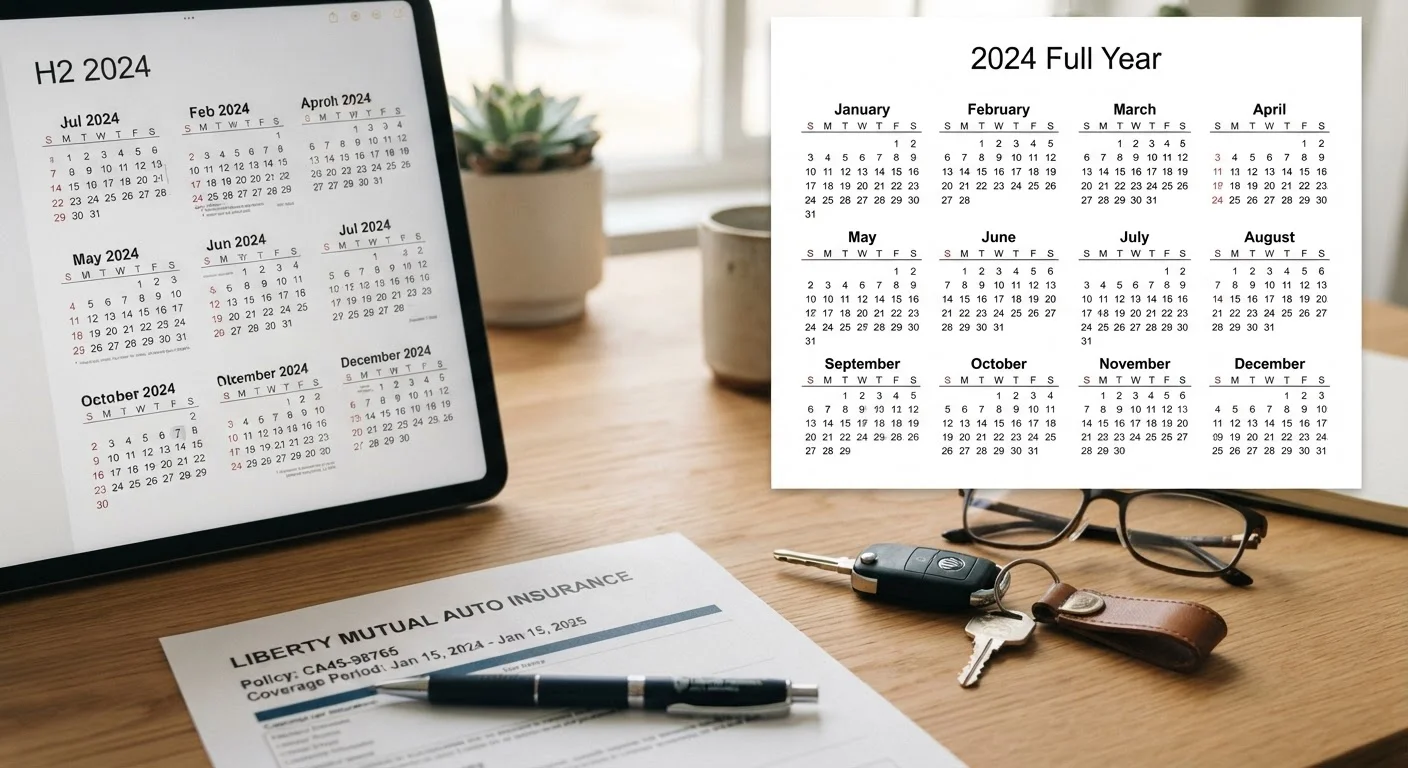
Mark Your Renewal Date on Your Calendar
Whether your term is six or twelve months, the renewal date is your primary window to adjust coverage, update personal information, or compare options in the market. Set a reminder 30 days before your policy expires to give yourself enough time to review without rushing. Changes made well before renewal tend to be less stressful and more thoroughly considered.
For a broader grounding in how policy documents are structured and what terms like "declarations page" and "endorsement" actually mean, Auto Insurance Policies, Decoded walks through the anatomy of a standard policy.
Practical Implications for Policyholders
The renewal moment is your clearest opportunity to shop for coverage elsewhere without penalty. Six-month policies create that opportunity twice annually, which can be an advantage for engaged shoppers. However, it also means insurers can exit unprofitable markets or adjust rate tiers more frequently - changes you may not anticipate.
Don't Let a Policy Lapse Between Terms
Regardless of whether you hold a six-month or annual policy, allowing coverage to lapse - even briefly - can result in a gap that insurers flag as a risk factor, potentially raising your future premiums. If you decide to switch insurers at renewal, confirm your new coverage start date aligns exactly with your old policy's end date before canceling.
Annual policies reduce the frequency of renewal decisions, which suits drivers who prefer a set-and-maintain approach. The trade-off is that you may miss a window to benefit from market competition or improved personal risk factors for a longer stretch.
Life events - a teenage driver added to the household, a paid-off car loan changing coverage needs - can make either term feel constraining at different times. Why Your Coverage Needs Can Change Over Time outlines the situations that most commonly prompt a policy review, regardless of term length.
If you're uncertain which term structure your current policy uses, check your declarations page - the summary document at the front of your policy that lists your term dates, coverage limits, and premium. A coverage glossary can help you interpret the terminology you'll find there.
This article provides general educational information about auto insurance policy structures and is not personalized insurance, financial, or legal advice. Coverage terms, pricing, and availability vary by insurer and state. Always review your actual policy documents and consult a licensed insurance agent or adviser for guidance specific to your situation.